
You don’t need a massive budget or a green thumb to turn a small outdoor space into something comfortable. In fact, dropping hundreds of dollars on full-grown nursery plants is usually a waste—half of them struggle to adapt to direct outdoor sun anyway.
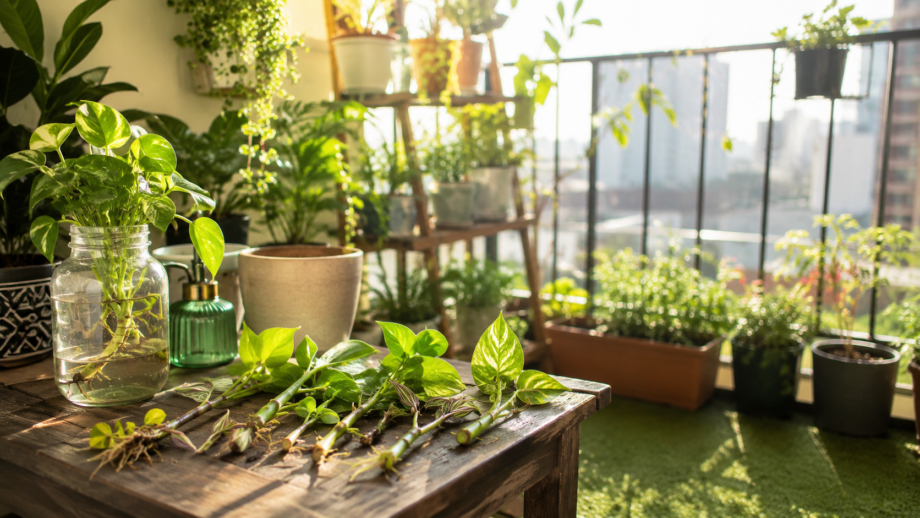
The easiest way to build out an outdoor setup is through propagation. Starting with simple cuttings lets you clone healthy plants for free, giving you a dense, custom green setup that actually survives.
If you’re looking for a low maintenance balcony plant setup that doesn’t feel like a full-time job, here is how to propagate your way to a green space on a budget.
1. Pick the best balcony plants for beginners
Not all plants take to cutting and water propagation easily. If you pick the wrong species, you’ll just end up with rotting stems in a glass jar.
Stick to hardy, fast-rooting options that handle outdoor conditions well:
- Pothos (Devil’s Ivy): Nearly impossible to kill. Roots quickly in water and trails over balcony railings effortlessly.
- Snake Plants: Great for low-light corners or hot sunny spots. You can literally chop a single leaf into sections and plant them directly in soil.
- Mint and Basil: Great for practical outdoor greening. Snip a fresh stem from a grocery store bundle, drop it in water, and it’ll sprout thick roots in ten days.
- Succulents (Jade, Echeveria): Pop a single leaf off, set it on dry soil, and it will spawn a brand-new mini plant on its own.
2. How to take a cutting that actually roots
Taking a plant cutting isn’t just chopping off a random leaf. You need to target the section of the stem that contains the growth cells—known as the node.
Look for the small, raised bumps or tiny brown nubs along the stem where leaves meet the main branch. That’s where new roots explode from.
- Use a sharp pair of scissors or a clean blade (dull tools crush the stem cell walls).
- Cut about half an inch below a node.
- Trim off the bottom leaves so they don’t sit under water and rot.
3. Water vs. soil propagation
Once you have your cuttings, you have two choices for root development:
| Method | Best Used For | What to Do |
| Water Propagation | Pothos, herbs, vining plants | Drop stems in a clear glass jar with tap water. Place it in bright, indirect light. Swap the water once a week. |
| Direct Soil Insertion | Succulents, snake plants, cacti | Let the cut end dry for 24 hours to form a calloused scab, then push it straight into damp potting soil. |
Water propagation is great because you can actually watch the root system grow. Once the roots are two to three inches long, transfer the cutting into a pot with well-draining soil.
4. Arrange for visual impact (not clutter)
A great balcony isn’t just a collection of random pots sitting on the ground. To make a small footprint feel open and intentional, vary your plant heights:
- Hang trailing vines: Place your rooted pothos cuttings in higher wall planters or railing boxes so they cascade downward.
- Group in threes: Mix tall structural plants (like snake plants) with bushy mid-height pots.
- Use natural pots: Stick to terracotta, concrete, or matte white ceramic planters. They let the deep green leaves stay the main focus without looking messy.
Keep the routine simple
Propagating plants takes a little bit of time at first, but once your cuttings establish roots, maintenance drops down to basic watering every few days. You get a lush, quiet outdoor corner that costs next to nothing and grows bigger every season.
Discover more from menvice
Subscribe to get the latest posts sent to your email.