
Walk into a skincare section looking for a face wash and things get complicated very quickly.
There are cleansers, foaming cleansers, exfoliating cleansers, toners, serums, moisturisers, eye creams, face oils, masks and products with names that sound more like chemistry experiments than something you put on your face.
It makes you wonder when washing your face became a 20-minute morning activity.
The answer is: it didn’t have to.
Skincare has become much more popular with men in India, and that’s not a bad thing. Looking after your skin is no different from looking after your teeth or hair. The problem starts when buying more products gets confused with taking better care of your skin. The American Academy of Dermatology recommends keeping the basics in place rather than automatically building a complicated routine.
If you want to start taking better care of your face, you don’t need to buy half the bathroom shelf.
Start with the boring stuff.
Your face doesn’t need to be scrubbed into submission
The first thing worth changing is how you wash your face.
If you’ve been using whatever soap happens to be sitting near the sink, switching to a mild facial cleanser is a sensible upgrade. Regular bar soap can be harsh and drying, and dermatologists recommend using a mild cleanser with lukewarm water instead.
You also don’t need to attack your face with a scrub because it feels satisfying.
That tight, squeaky feeling after washing isn’t proof that your face is exceptionally clean. Scrubbing too hard can irritate the skin, and irritation is particularly unhelpful if you’re already dealing with acne, razor burn or sensitivity.
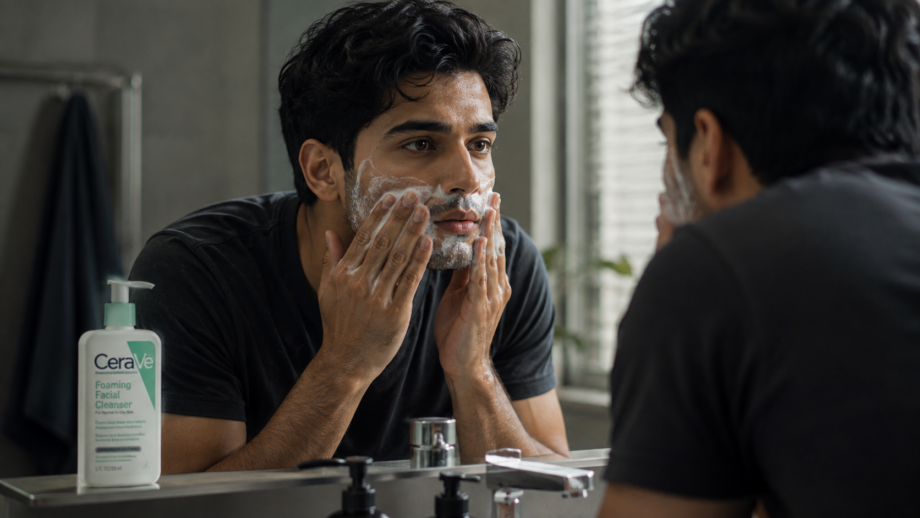
For something straightforward, CeraVe Foaming Facial Cleanser is a product I’d look at if your skin is normal to oily. It is made to remove excess oil and dirt and contains ceramides, hyaluronic acid and niacinamide. It isn’t trying to be a miracle product; it’s a cleanser doing a cleanser’s job.
If your skin is dry or sensitive, that’s a different situation. A gentler, hydrating cleanser may be a better choice. Skin type matters more than whether the bottle has a black label and the word “MEN” printed across it.
Then there’s moisturiser
This is where the oily-skin argument usually begins.
“If my face is already oily, why would I put more stuff on it?”
Fair question.
Moisturiser isn’t simply oil that you’re adding to your face. It helps keep water in the skin and can be useful even when you’re dealing with acne or oily skin. In fact, some acne treatments can dry and irritate the skin, making a suitable moisturiser useful alongside them.
The trick is choosing something that suits your skin.
If your face gets oily quickly, a lighter, oil-free or non-comedogenic moisturiser may feel better. If your skin gets dry or flaky, a richer moisturiser makes more sense.
You don’t need to buy an expensive one just because the packaging looks like it belongs in a hotel bathroom.
Sunscreen is probably the one worth taking seriously
This is the part of skincare that has nothing to do with looking trendy.
UV exposure contributes to premature skin ageing and increases the risk of skin cancer. Dermatologists recommend broad-spectrum sunscreen with SPF 30 or higher when you’re going outdoors.
In India, this is especially relevant if your day involves driving, walking, outdoor work, sport or simply spending a lot of time outside.
You don’t need to make sunscreen into a personality trait.
Put it on when you’re going to be exposed to the sun. If you’re spending extended time outdoors, reapplication matters too.
And if sunscreen is the one product in your routine you actually use every day, that’s a pretty good place to start.
What about all the other stuff?
This is where I’d slow down before buying anything.
Serums can be useful. So can exfoliating products. There are ingredients with good evidence behind them for particular skin concerns.
But that doesn’t mean you need them because somebody on Instagram has twelve bottles lined up beside the bathroom mirror.
If acne is your problem, deal with acne.
If pigmentation is your problem, look into products and treatments that actually target pigmentation.
If your skin is dry, fix the dryness.
If shaving leaves you with razor bumps, change your shaving routine rather than buying a random serum and hoping for the best.
The American Academy of Dermatology makes a similar point when discussing skincare: choose products according to your skin type and the problem you’re actually trying to address. Adding several products at once can also make irritation harder to identify.
That makes sense.
If you introduce five new products on Monday and your face starts breaking out on Thursday, good luck figuring out which one caused it.
Shaving deserves its own attention
There is one area where a man’s skincare routine can be slightly different simply because there may be a razor involved.
If you regularly get razor burn, ingrown hairs or bumps, the solution may have more to do with how you’re shaving than what face cream you’re using.
The AAD recommends wetting the skin and hair before shaving, using a moisturising shaving cream, shaving in the direction of hair growth and avoiding stretching the skin tight. For people who regularly get razor bumps, a single- or double-blade razor may work better than a very close multi-blade shave.
So yes, skincare can sometimes mean changing what you do with a razor rather than buying another bottle.
A routine can be very boring
And that’s actually a good thing.
Something like this is enough of a starting point:
Morning: cleanser, moisturiser if you need it, sunscreen when you’re going outside.
Evening: cleanser and moisturiser if your skin needs it.
You can add something later if there’s a reason for adding it.
That’s the important part.
The routine should change because your skin needs something, not because a new product appeared on your Instagram feed.
Dermatologists have also stressed that consistency matters more than having a long routine. Using a few appropriate products regularly is more useful than constantly changing products and irritating your skin.
There is nothing wrong with enjoying skincare. If you like trying different products, learning about ingredients and experimenting, that’s fine too.
But if the whole thing feels like another chore, don’t make it bigger than it needs to be.
Clean your face properly. Keep it moisturised when necessary. Protect it from the sun. Deal with actual problems when they show up.
You can leave the other nine bottles on the shelf until you have a reason to buy them.
Discover more from menvice
Subscribe to get the latest posts sent to your email.